

Introduction: Precision in the Sales Pipeline
The core goal of any lead generation strategy is not volume, but quality. A pipeline full of unqualified leads wastes valuable sales time, demoralizes the team, and inflates Customer Acquisition Cost (CAC).1 Effective qualification is the art of sorting prospects based on their readiness to buy. This requires a clear, shared understanding between marketing and sales of the two foundational lead types: Marketing Qualified Leads (MQLs) and Sales Qualified Leads (SQLs). Defining this distinction is crucial for converting high-quality prospects into valuable clients.
Defining the Handover Point: The MQL to SQL Transition
The biggest mistake companies make is failing to define the exact criteria for when a lead stops being a marketing responsibility and becomes a sales opportunity.
| Lead Type | Definition & Intent | Typical Actions/Behaviors | Team Responsibility |
| MQL | Shows interest in the solution but is not yet ready for a sales conversation. Intent is informational. | Downloads high-value content (e.g., Whitepaper), attends a general webinar, visits the website multiple times. | Marketing & Nurturing |
| SQL | Shows clear buying intent and meets critical qualification criteria. Ready for direct sales engagement. | Requests a demo, asks for pricing, starts a free trial, responds positively to sales outreach. | Sales Development & Closing |
The Role of Lead Scoring (MQL to SQL)
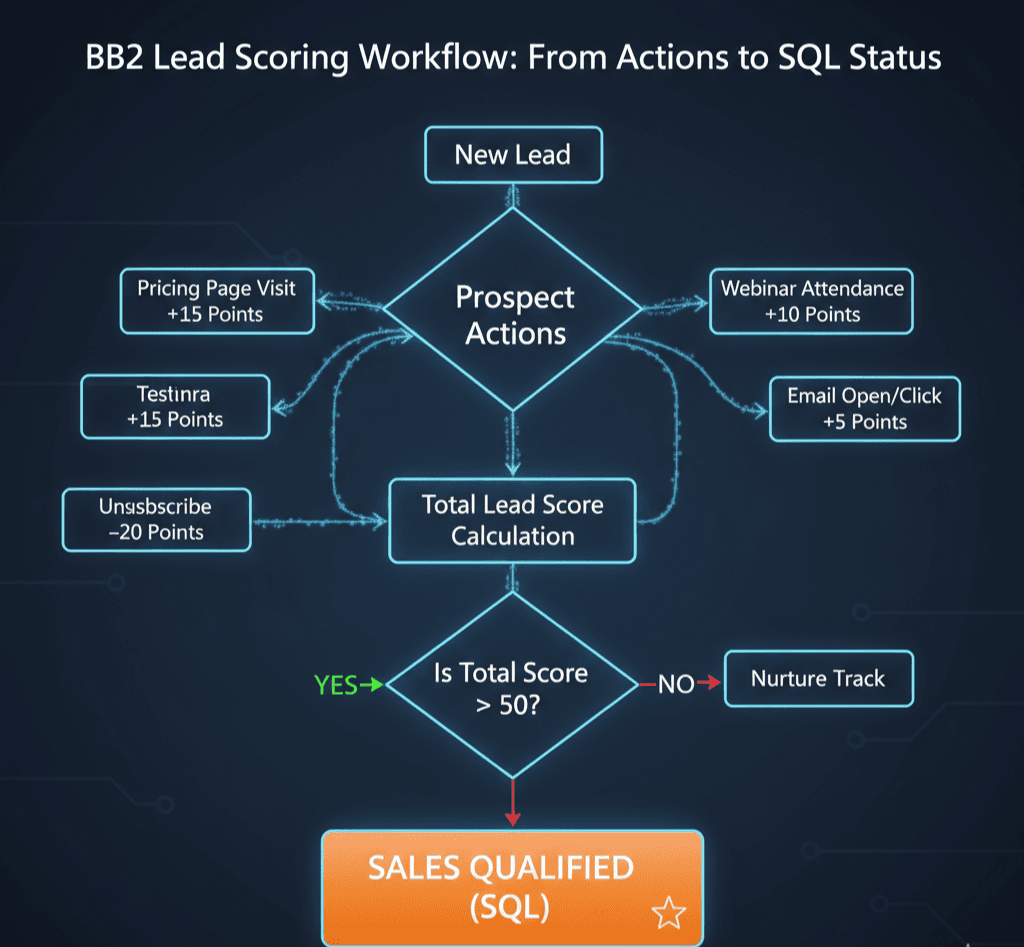
Lead scoring is the objective, data-driven process used to automate the MQL-to-SQL transition.2 Every lead activity is assigned a point value.
- Behavioral Scoring: Points are awarded for high-value actions (e.g., viewing the pricing page: +10 points).3
- Demographic/Firmographic Scoring: Points are awarded for fitting the ideal customer profile (e.g., job title: +5 points; company size: +15 points).4
The Service Level Agreement (SLA) between Marketing and Sales defines the “magic number” (e.g., 50 points) at which an MQL automatically converts to an SQL, triggering a handover alert.
The Sales Qualification Deep Dive (BANT & MEDDIC)
Once a lead is deemed an SQL, the Sales Development Representative (SDR) must apply a deeper qualification framework to ensure they are a high-value client:
- BANT (Budget, Authority, Need, Timeline): A classic framework used to confirm the tactical fit of the opportunity. Is the prospect’s pain immediate, and do they have the financial power to solve it?
- MEDDIC (Metrics, Economic Buyer, Decision Criteria, Decision Process, Identify Pain, Champion): A more advanced, strategic framework often used in complex B2B sales to qualify high-value deals thoroughly.
Quote: “The goal is to provide the sales team with leads that are hot, not just warm. Quality over quantity ensures every conversation is a high-value opportunity.”
Creating a Seamless Handover
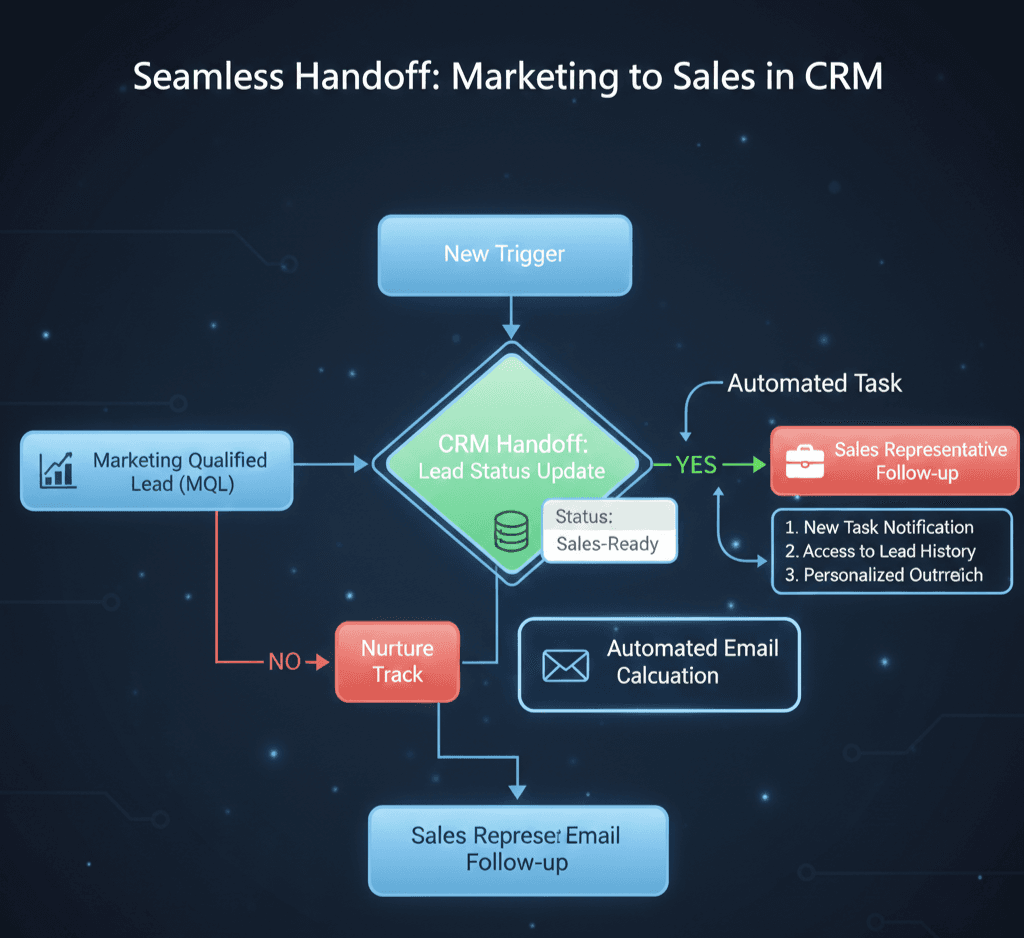
The transition from MQL to SQL is where most leads are lost. The handover must be smooth and well-documented.
- Context is King: The CRM must automatically transfer the lead score, behavioral history, and all relevant marketing interaction data to the sales agent.
- Rapid Response: Sales must adhere to a strict time limit (ideally under 5 minutes) to follow up once a lead is flagged as an SQL.
- Closed-Loop Feedback: Sales must report back to Marketing on the quality of the SQLs received (e.g., “SQL Accepted,” “SQL Rejected”). This feedback loop allows Marketing to refine its campaigns and improve scoring accuracy.
Conclusion: Driving Revenue Through Alignment
Successful lead generation is dependent on precision qualification. By clearly defining the MQL and SQL criteria, implementing a robust lead scoring system, and fostering alignment through a seamless handover process, organizations ensure their sales resources are focused exclusively on the highest-quality prospects. This strategic focus is the most reliable way to increase conversion rates and secure valuable, paying clients.





Leave a comment