

Introduction: Speed and Stability as Conversion Drivers
In the competitive world of e-commerce, user expectations for speed are absolute. Customers abandon slow or unstable sites, directly impacting revenue. Google’s Core Web Vitals (CWV) are a set of metrics that measure real-world user experience based on loading speed, interactivity, and visual stability. For web design and development, optimizing these vitals is non-negotiable—it’s the foundation for high-converting websites and superior customer experience. Ignoring CWV directly harms your SEO ranking and, critically, your bottom line.
The Three Pillars of Core Web Vitals (CWV)
Understanding the role of each metric is the first step toward optimization:
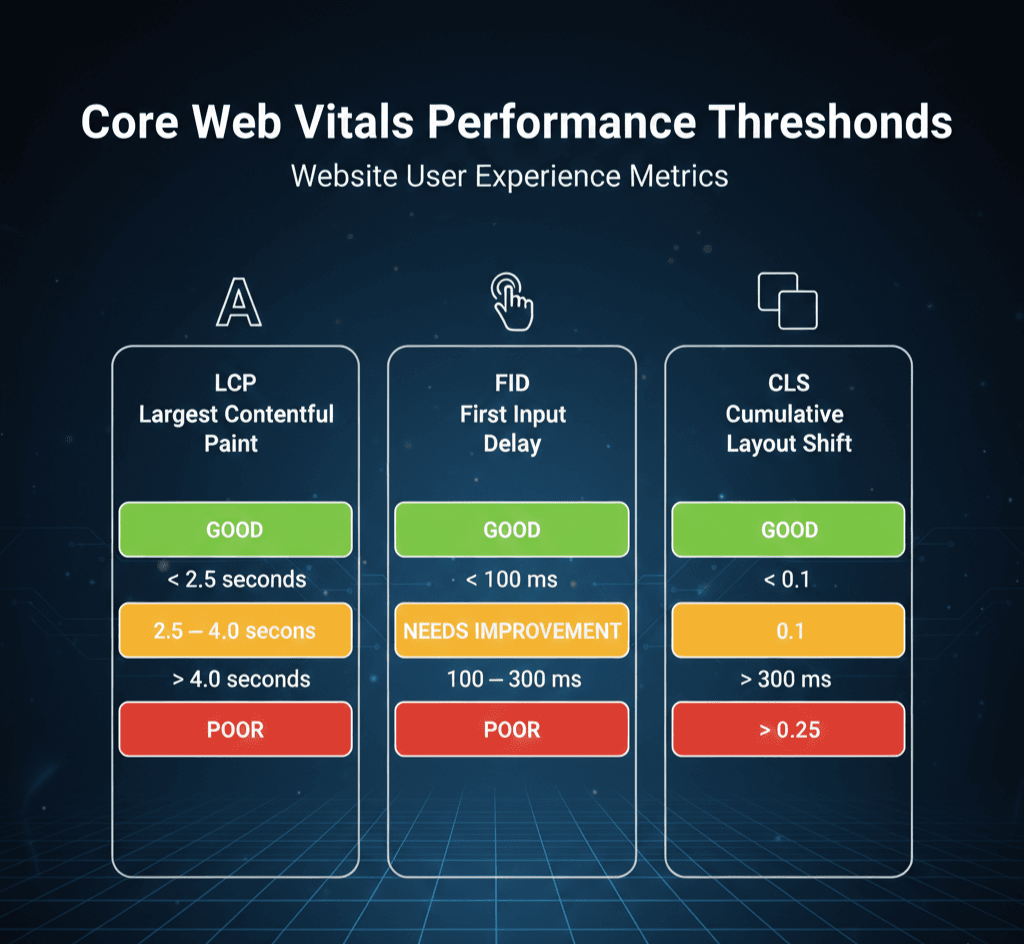
- Largest Contentful Paint (LCP): Measures loading performance. This is the time it takes for the largest image or text block to load and become visible. Goal: Below 2.5 seconds.
- First Input Delay (FID): Measures interactivity. This is the time from when a user first interacts with a page (e.g., clicks a button) to the time the browser is able to begin processing that interaction. Goal: Below 100 milliseconds.
- Cumulative Layout Shift (CLS): Measures visual stability. This quantifies unexpected shifts of content on the page during load, which can lead to accidental clicks or user frustration. Goal: Below 0.1.
E-commerce Optimization Strategies for Each Metric
Targeted design and technical implementation are required to improve each vital:
| CWV Metric | E-commerce Failure Point | Optimization Strategy |
| LCP (Loading) | Large product hero images or slow server response time. | Compress Images: Use next-gen formats (WebP) and ensure the server responds rapidly (TTFB). |
| FID (Interactivity) | Heavy JavaScript execution blocking the main thread during load. | Minimize and Defer JavaScript: Load non-essential scripts only after the page is interactive. |
| CLS (Stability) | Images without explicit dimensions or dynamically injected ad banners. | Reserve Space: Always define the width and height attributes for images and video elements. |
Quote: “In e-commerce, performance is marketing. Every millisecond saved translates directly into a higher probability of conversion.”
UX Impact: From Vitals to Conversions
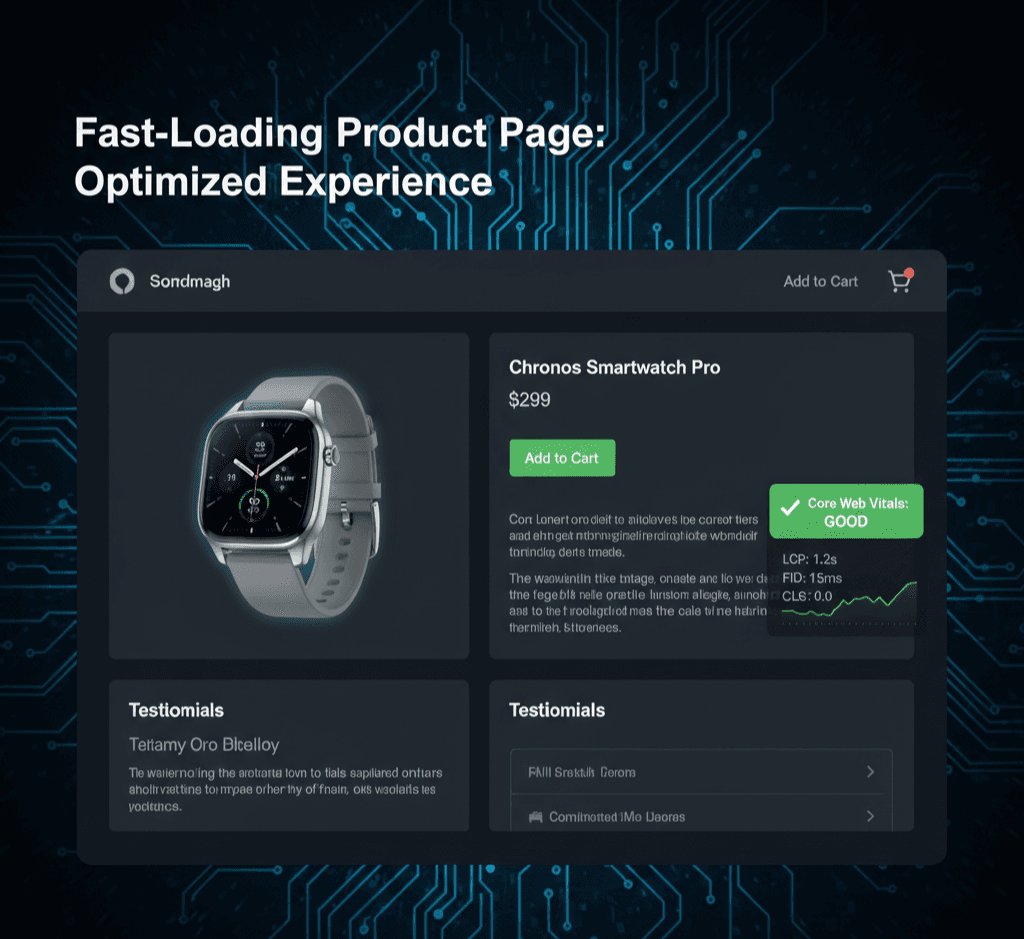
Optimizing CWV is fundamentally a UX strategy. When pages load instantly and are stable, customer trust increases, and friction is eliminated, leading to better business outcomes:
- Reduced Bounce Rate: Fast loading keeps users on the product page.
- Higher Conversion Rate: Stable pages prevent frustrating, accidental clicks on competitor ads or incorrect product variants.
- Improved SEO Ranking: Google uses CWV as a direct ranking factor, ensuring your high-converting pages are visible.
Conclusion: The Foundation of Digital Success
For e-commerce, Core Web Vitals are the ultimate measure of design quality and engineering effectiveness. By making LCP, FID, and CLS the central focus of your development and design principles, you not only improve search engine visibility but, more importantly, create a superior, friction-free user experience that directly supports lead capture and drives measurable revenue growth.







Leave a comment