
Introduction: LinkedIn as a B2B Ecosystem
For businesses operating in the B2B space, LinkedIn is not just a resume repository—it is the single most powerful ecosystem for organic lead generation. Unlike broad social media platforms, LinkedIn is designed for professional networking and content consumption, making it ideal for attracting, qualifying, and converting high-quality prospects. The key to successful organic lead generation here is shifting from “selling” to becoming a Thought Leader in your niche.
Step 1: Optimize Your Profile for Prospect Attraction
Your profile is your landing page. If it looks like a generic resume, it will repel leads. It must be optimized to attract your ideal client:
- The Headline: Move beyond your job title. Use a headline that states the problem you solve for your client (e.g., “Helping SaaS companies achieve $10M ARR through advanced sales funnel optimization”).
- The Summary (About Section): Structure it around the client: Their pain points, your unique solution, social proof (results/metrics), and a clear Call-to-Action (CTA) to connect or book a consultation.
- Media and Recommendations: Embed relevant case studies or portfolio samples directly in your profile. Seek recommendations from past clients that speak to your business impact.

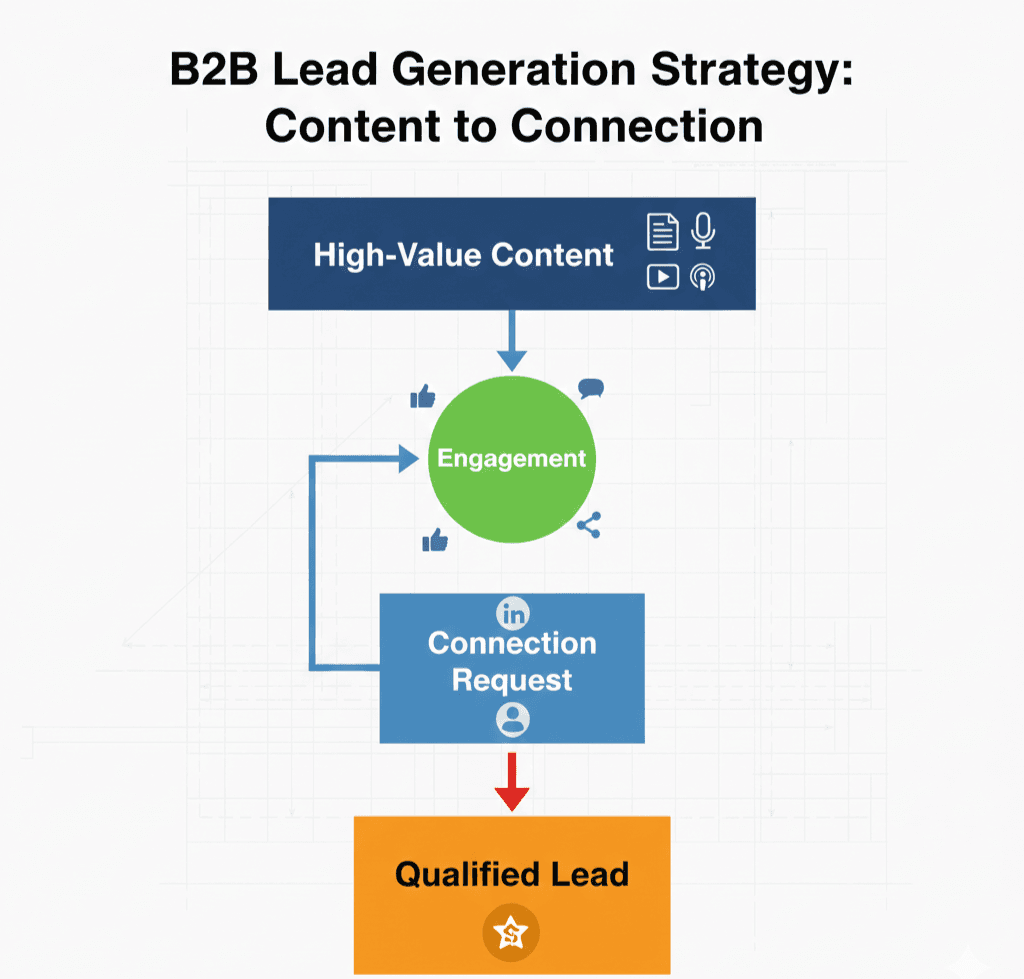
Step 2: Establish Thought Leadership with High-Value Content
Consistent, high-quality content is the engine of organic lead generation. It establishes credibility and naturally draws prospects to your profile.
- Focus on Value, Not Promotion: Your content (posts, articles, carousels) should educate, challenge, or inspire your target audience. Address their top-of-funnel problems.
- Vary the Format: Use polls for engagement, native videos for reach, and detailed articles for demonstrating deep expertise.
- Consistency: Post 3-5 times per week during business hours. LinkedIn rewards active, consistent users with higher organic reach.
Quote: “Don’t focus on having a great story to tell; focus on building a great story to share through your results and thought leadership.”
Step 3: Targeted Engagement and Relationship Building
Organic lead generation is an active, not passive, process. You must strategically engage with your ideal prospects.
- Identify Ideal Prospects: Use LinkedIn’s search filters to find specific job titles, industries, and company sizes that match your target client.
- Engagement First: Before sending a connection request or sales pitch, interact genuinely with their recent content (commenting with insightful feedback, sharing their posts). This warms up the relationship.
- The Connection Request: When connecting, use a short, personalized note referencing their content or a mutual interest, not a sales pitch. The sales conversation only begins once the connection is established and rapport is built.
Conclusion: The Long-Term Organic Engine
Generating B2B leads organically on LinkedIn is a long-term strategy built on authenticity and consistent value delivery. By transforming your profile into an optimized landing page, establishing yourself as a credible thought leader, and engaging with genuine intent, you build a powerful, sustainable engine that attracts high-quality prospects directly into your sales funnel, bypassing the need for extensive ad spend.




Leave a comment