
Introduction: Marketing to the Buyer’s Mindset
Traditional marketing often treats all leads equally, resulting in wasted budget and low conversion rates. Intent-Based Marketing is a strategic approach that recognizes customers are at different points in their buying journey and requires tailored content for each stage. By focusing on the buyer’s intent (what they are thinking and what action they are ready to take), organizations can build precise funnels that nurture leads efficiently and achieve superior business objectives.
Understanding the Buyer’s Journey and Intent
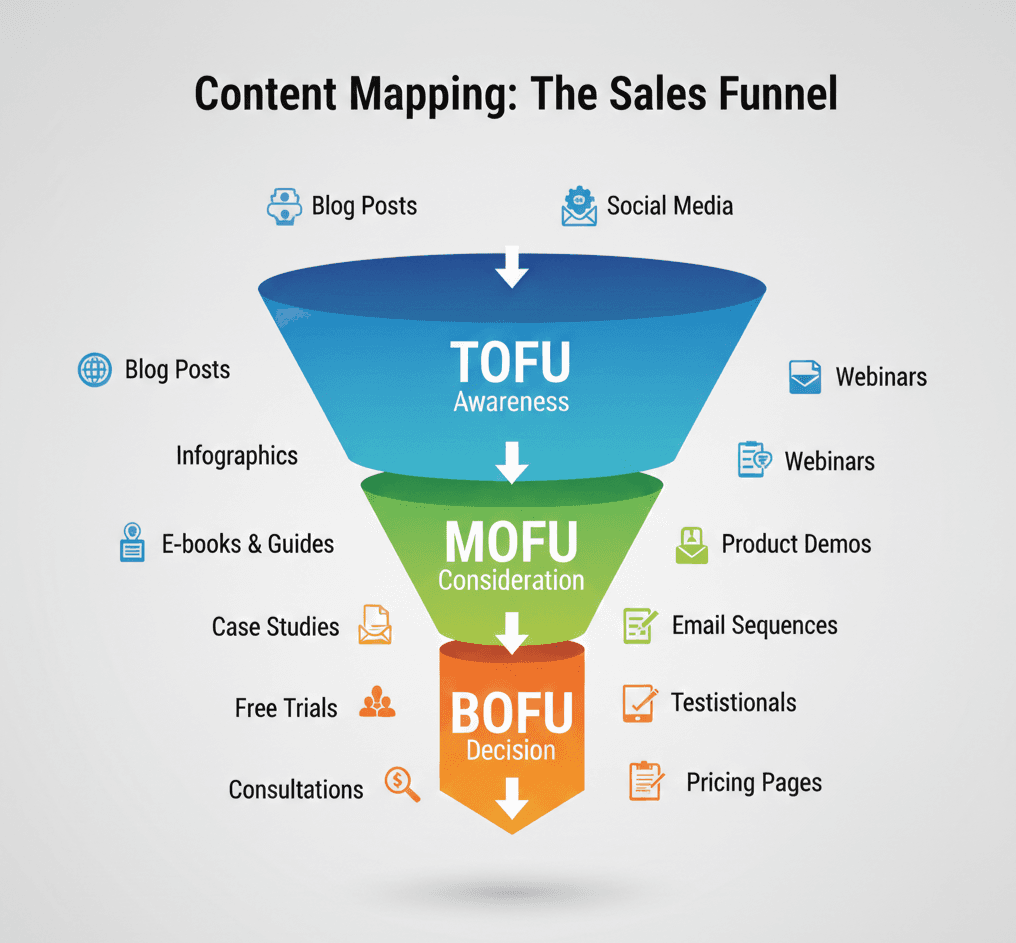
The marketing funnel can be simplified into three core stages, each defined by a specific type of buyer intent:
| Stage | Intent | Goal | Content Focus |
| TOFU | Informational | Educate and attract | General solutions, high-level problems |
| MOFU | Navigational/Commercial | Build trust and qualify | Specific products, comparative data |
| BOFU | Transactional | Convert the sale | Pricing, demos, unique offer |
Stage 1: Top of Funnel (TOFU) – Awareness
At this stage, the customer recognizes they have a problem but is researching solutions broadly. Their intent is purely informational.
- Keywords: General questions (“How to…”, “What is…”, “Tips for…”).
- Content: Blog posts, whitepapers, social media engagement, and high-value guides.
- Goal: Capture the lead (email address) and establish thought leadership. The campaign’s objective is massive reach and low-cost lead generation.
Stage 2: Middle of Funnel (MOFU) – Consideration
The lead is now actively comparing potential solutions and providers. Their intent is commercial investigation. They are evaluating you.
- Keywords: Specific features (“Best tools for X,” “Comparison of Y vs. Z,” “Alternatives to…”).
- Content: Webinars, case studies, product feature guides, and free trials.
- Goal: Demonstrate unique value, show results (social proof), and qualify the lead for sales readiness.
Quote: “Stop interrupting what people are interested in, and be what people are interested in.” – Craig Davis. Intent-based marketing ensures you are already relevant.
Stage 3: Bottom of Funnel (BOFU) – Decision
The lead is ready to buy and is choosing a vendor. Their intent is purely transactional. The content here must eliminate final objections.
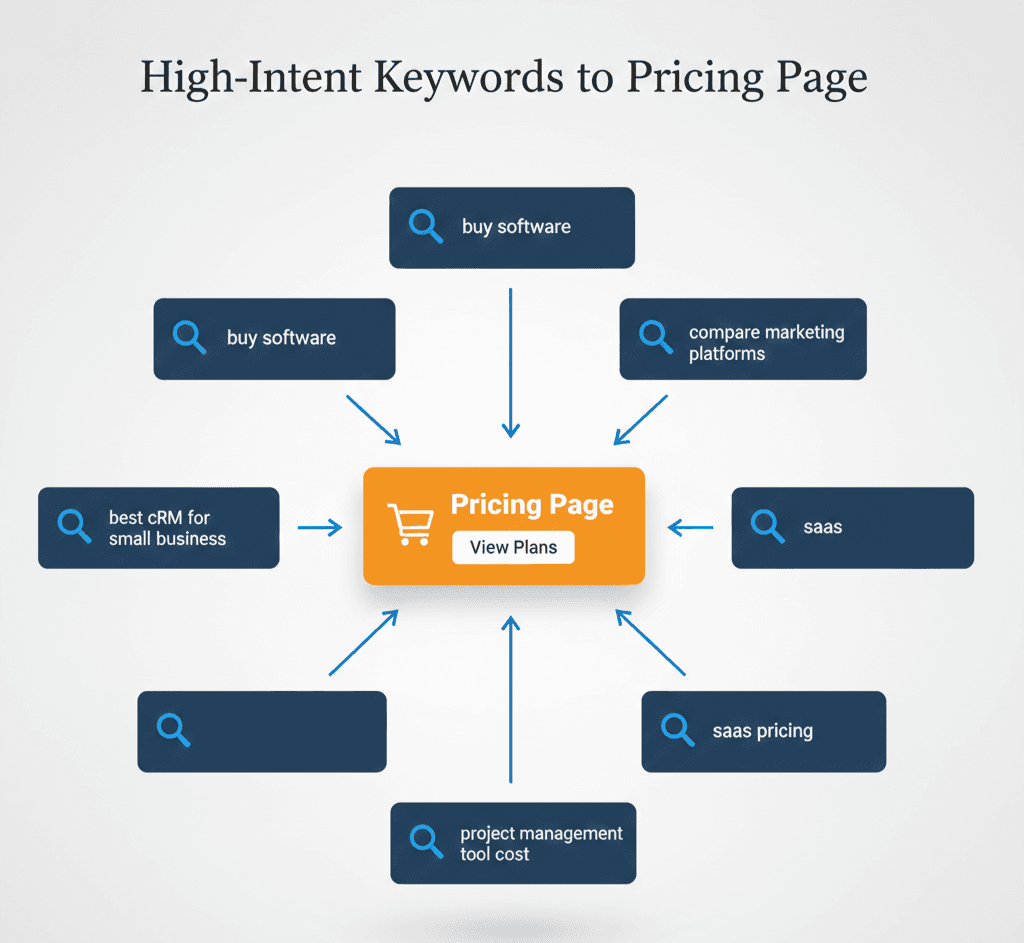
- Keywords: High-intent terms (“Pricing,” “Demo,” “Consultation,” “Sign up now”).
- Content: Free consultations, personal demos, direct price comparisons, testimonials, and implementation plans.
- Goal: Convert the lead into a paying customer and secure the sale.
Conclusion: Precision Over Volume
The power of intent-based marketing funnels lies in their efficiency. By precisely mapping content types to the specific needs and intent signals of the buyer at each stage, marketers drastically reduce the number of wasted impressions and advertising dollars. This strategic alignment accelerates the customer journey, improves the marketing ROI, and ensures that every campaign contribution moves the organization closer to its ultimate business objectives.




Leave a comment