
Introduction: Risk Management as a Project Foundation
In strategic planning, a successful project is often less about brilliant execution and more about effective risk mitigation. Every project, regardless of size, carries inherent risks that can lead to delays, budget overruns, and complete failure. The process of de-risking involves proactively identifying potential failure points and establishing contingency plans before a crisis occurs. This proactive approach is the core of effective strategic thinking and foundational project planning.
The Risk Identification Matrix
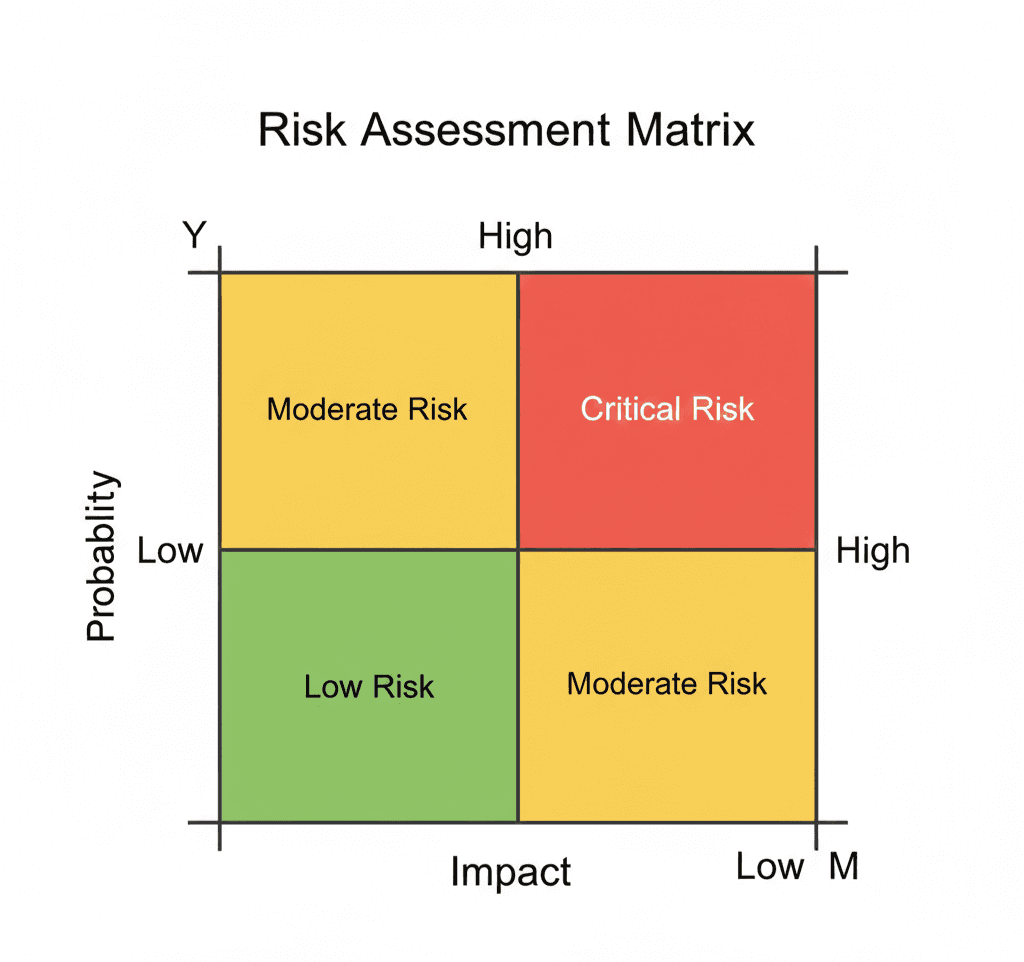
The first step in de-risking is a systematic identification of threats. A Risk Matrix (Probability vs. Impact) is crucial for prioritizing where to focus mitigation efforts. Risks should generally fall into these six key failure areas:
- Scope Creep: Uncontrolled changes or continuous additions to the project scope after the baseline is established.
- Resource Mismatch: Lack of necessary skills, insufficient team bandwidth, or unexpected loss of key personnel.
- Poor Communication: Siloed information, unclear reporting lines, or a lack of stakeholder transparency.
- Technology/Dependency Risk: Reliance on unstable or poorly documented third-party systems or outdated infrastructure.
- Budget Volatility: Underestimation of costs, unexpected vendor price increases, or uncontrolled expenditures.
- External Factors: Regulatory changes, competitor actions, or unforeseen economic shifts.
Mitigation Strategies for Common Failure Points
Once identified, risks must be addressed with specific strategies:
| Failure Point | Mitigation Strategy |
| Scope Creep | Implement a formal change request process requiring sign-off from all major stakeholders and a mandatory timeline/budget adjustment review. |
| Resource Mismatch | Establish cross-training for critical roles and build a resource buffer (e.g., 10% extra bandwidth) into the schedule for unexpected delays. |
| Poor Communication | Define a Communication Plan outlining frequency, format (weekly reports, daily stand-ups), and who is responsible for updating whom. |
| Technology Dependency | Conduct a Proof of Concept (POC) for any new technology before full integration; build failover systems for critical dependencies. |
Quote: “A failure to plan is a plan to fail. Risk mitigation is simply planning for all the ways things might go wrong.”
Implementing a Continuous Monitoring System
De-risking is not a one-time event; it’s a continuous cycle. Effective project roadmaps include regular check-ins designed specifically to reassess risks.
- Risk Registers: Maintain a living document that tracks every identified risk, its current probability, its potential impact, and the owner responsible for its mitigation.
- Contingency Reserve: Always allocate a financial and time buffer (Contingency Reserve) to address high-impact, unforeseen risks without derailing the entire project. This reserve should be controlled by the project sponsor, not the project manager.
- Lessons Learned: Post-project analysis must include a review of risks that materialized and risks that were successfully avoided. This feedback loop strengthens future planning methodologies.

Conclusion: The Value of Proactive Planning
Strategic planning is defined by anticipation. By systematically identifying, analyzing, and building mitigation strategies for key failure points, organizations move beyond simple project management and embrace true strategic leadership. De-risking projects ensures that execution remains aligned with the original vision, securing the achievement of long-term business and professional goals.






Leave a comment