

Introduction: The Pace of Change Demands Adaptation
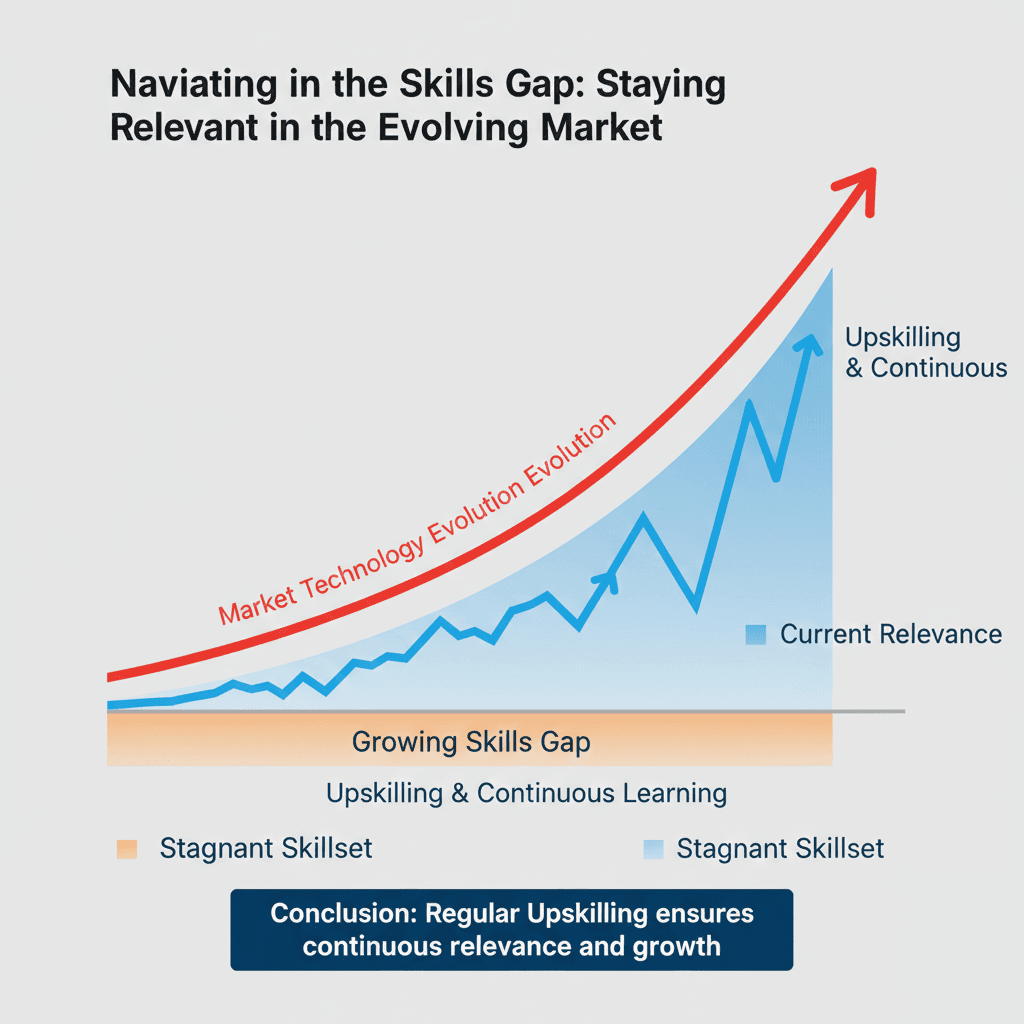
The contemporary job market is defined by rapid technological innovation and shifting economic landscapes. Skills that were premium five years ago are now baseline expectations. In this environment, continuous learning (or lifelong learning) is not a bonus—it is the prerequisite for career stability and advancement. Those who fail to adapt risk professional obsolescence, while those who embrace learning secure a future where opportunities seek them out. This commitment to growth is the ultimate form of professional development.
The Risk of Professional Obsolescence
The shelf life of specialized skills is shrinking across almost every industry, from finance and marketing to engineering. The rise of Artificial Intelligence (AI) and automation means routine, knowledge-based tasks are increasingly handled by machines. This elevates the demand for uniquely human skills and advanced technical abilities that integrate new technologies.
The solution is a proactive approach: reskilling for entirely new roles and upskilling to deepen expertise in current roles. Prioritizing learning that focuses on problem-solving, critical thinking, and advanced data analysis is paramount.
Prioritizing T-Shaped Skills
In a changing market, the most valuable professionals possess T-shaped skills: deep expertise in one specific area (the vertical bar of the T) combined with broad competency across related disciplines (the horizontal bar).
- Vertical Depth: Maintain mastery in your core function (e.g., Python development, financial modeling).
- Horizontal Breadth: Understand the adjacent disciplines (e.g., knowing basic cloud infrastructure, understanding marketing funnels). This breadth allows you to collaborate effectively and adapt when your core function changes.
Quote: “The ability to learn faster than your competitors may be the only sustainable competitive advantage.” – Arie de Geus, former Coordinator of Group Planning at Royal Dutch Shell
Actionable Strategies for Lifelong Learning
Integrating learning into a busy professional schedule requires structure and commitment. Treat your development time like a critical business meeting.
- Microlearning Blocks: Dedicate 15-30 minutes daily to focused learning (reading articles, watching tutorials). Consistency beats intensity.
- Project-Based Learning: The fastest way to acquire a new skill is to apply it immediately. Seek out side projects or internal initiatives where you can practice what you learn.
- Mentorship & Reverse Mentorship: Learn from senior colleagues, but also seek out younger employees or external experts to teach you about emerging trends (like AI tools or new social platforms).

Conclusion: Investing in Your Future Self
Continuous learning is the most reliable strategy for sustained career success. It ensures you remain relevant, resilient, and ready to seize new opportunities as the market evolves. By making the commitment to regular self-development, you are not just keeping pace—you are actively designing your future, guaranteeing your place in the most dynamic and rewarding phases of professional life.







Leave a comment